
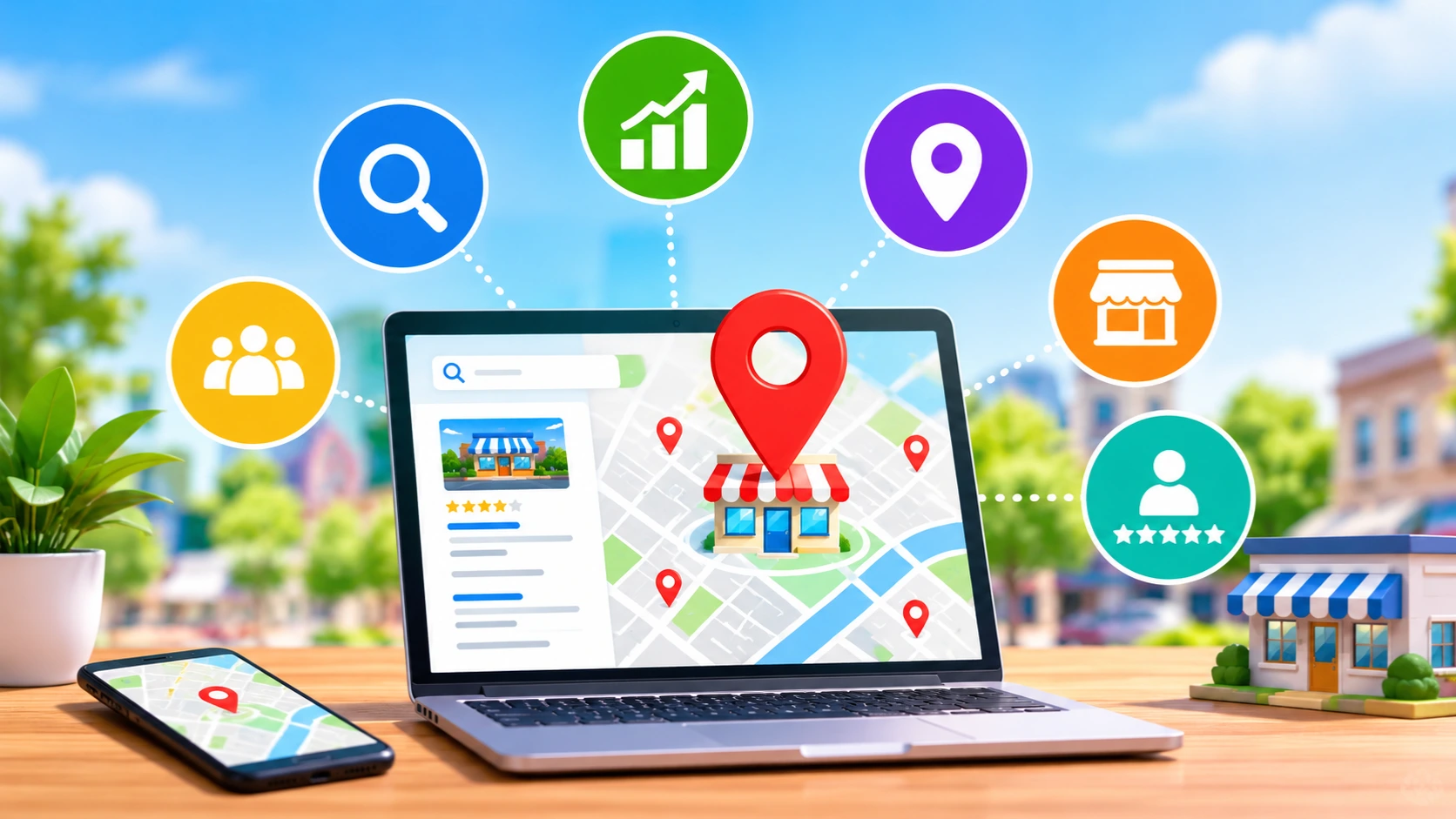
When people need a product or service, they often search online before deciding where to spend their money. For local businesses, these searches are especially important because customers are often looking for a company that serves a specific city, neighborhood, or nearby area.
A person may search for a Personal injury lawyer in Dallas, Property damage lawyer in Florida, Car accident lawyer near me. These searches show clear local intent, which means the person is not simply looking for general information. They may be looking for a business they can contact or visit. This is where local SEO becomes valuable.
Local SEO helps businesses improve their visibility when people search for relevant products and services in a particular geographic area. It involves more than adding a city name to a website. A strong local SEO strategy can involve business profile optimization, location information, website content, reviews, citations, local links, technical SEO, and a consistent online presence.
In 2026, local search continues to be an important opportunity for businesses that depend on customers in specific geographic areas. Businesses that make local visibility part of their broader SEO strategy can create more opportunities to appear when nearby customers are actively looking for what they offer.
What Is Local SEO?
Local SEO is the process of improving a business's online presence so it can become more visible for searches with local intent. Local intent can appear in several ways.
For example, someone may search for:
Law firm near me
Best lawyer in Texas
Real estate lawyer Florida
Business lawyer New York
A local search can also happen without an obvious location phrase. Search engines may use contextual signals, including the searcher's location, to understand that a query has local intent.
Local SEO therefore focuses on helping search engines understand:
What the business does
Where the business operates
Which customers it serves
What products or services it provides
How trustworthy and relevant the business is
The goal is to make the business easier for potential local customers to discover.
How Does Local SEO Work?
Local SEO involves several connected activities rather than one single optimization. A business may need to work on:
Its Google Business Profile
Website service pages
Location pages
Business name, address, and phone information
Online reviews
Local citations
Internal links
Local content
Technical SEO
Relevant local links
On-page optimization
Mobile usability
Search engines use multiple signals to determine which businesses and websites are relevant to a local search. This means a business should not rely on only one tactic.
For example, creating a Google Business Profile is useful, but it does not replace having a strong website. Similarly, publishing location pages does not automatically guarantee local rankings. A complete local SEO strategy brings multiple signals together.
10 Benefits of Local SEO in 2026
Local SEO can benefit businesses in many ways. The following ten advantages are especially important for companies that depend on customers from specific locations.
1. Helps Customers Find Your Business in Local Search
The most obvious benefit of local SEO is improved visibility when potential customers search for businesses in a particular area. Imagine someone searches for a service that your company provides. If your business has strong local visibility, there may be more opportunities for that person to discover your:
Business profile
Website
Phone number
Address
Service pages
Reviews
Other business information
Without a local search strategy, a business may be less visible when customers in its target area are actively searching. This is particularly valuable for businesses where location influences the buying decision.
Local Search Has Strong Intent
A local search often indicates that the person has a specific need. Someone searching for "Land registration lawyer near me" is usually more commercially valuable than someone simply searching for What is the best quality of a lawyer?
The first query suggests the person may need a service provider. The second may be purely informational. Local SEO helps businesses compete for searches that can be closer to a real-world action.
2. Helps Generate More Qualified Local Leads
Local SEO can attract people who are searching for services within the area a business actually serves. This can improve the quality of website traffic. The same applies to professional services. A law firm may want potential clients searching for a lawyer in the cities or regions where the firm operates.
Local Leads Can Take Different Forms
A local SEO visitor might:
Call the business
Request a quote
Submit a form
Ask for directions
Visit the location
Schedule an appointment
Contact the business through a website
Review available services
These actions can be more valuable than simply increasing general website traffic.
3. Increases Visibility on Google Business Profile
A Google Business Profile is an important part of local search visibility for eligible businesses. A properly maintained profile can provide potential customers with useful information about a business. Depending on the business and search, people may see:
Business name
Category
Location
Service area
Phone number
Website
Hours
Reviews
Photos
Services
Other available business information
This can make it easier for customers to evaluate a business without immediately visiting the website. However, a business profile should not be treated as a replacement for a website. The profile and website should support each other.
What Should Businesses Keep Updated?
Businesses should regularly review important information such as:
Business name
Address
Phone number
Hours
Business category
Services
Photos
Website link
Incorrect information can create confusion and reduce trust.
4. Helps Build Trust Through Online Reviews
Reviews play an important role in how customers evaluate local businesses. Before contacting a company, people may look at its ratings and read comments from previous customers. A business with strong, genuine reviews may appear more trustworthy than a business with little or no customer feedback. Local SEO and reputation management can therefore work together. Businesses should focus on earning genuine customer reviews rather than attempting to manipulate ratings.
Why Reviews Matter
Reviews can help potential customers understand:
Customer experiences
Service quality
Communication
Reliability
Professionalism
Common strengths or weaknesses
Businesses should also respond appropriately to reviews. Positive reviews can be acknowledged with a simple professional response. Negative reviews should be handled calmly and constructively rather than through arguments.
The goal is to demonstrate professionalism to both the reviewer and future customers who may read the conversation.
5. Helps Reach Customers With "Near Me" Searches
Searches containing phrases such as "near me," "nearby," or "close by" are strongly connected with local intent.
For example: Lawyer near me
The important point is that businesses should not attempt to manipulate rankings by repeatedly adding "near me" to website content.
Search engines can understand local intent using multiple signals. Instead, businesses should provide accurate information about where they operate and make their website and business profile useful to local customers.
Local Relevance Is More Than a Keyword
A business can demonstrate local relevance through:
Accurate business information
Clearly defined service areas
Relevant location pages
Local customer reviews
Appropriate business categories
Local content
Consistent citations
Relevant local links
These elements help provide context around the business.
6. Supports Mobile Search Visibility
Local search and mobile browsing often go together. People frequently use smartphones when they are trying to find a nearby business or service. A potential customer may search while:
Traveling
At home
At work
Shopping
Driving
Looking for an urgent service
The person may want to call immediately or get directions. This makes mobile usability important for local SEO. A local SEO strategy should therefore be supported by a website that works properly on smartphones.
Important mobile elements include:
Easy-to-use navigation
Clickable phone numbers
Clear contact information
Fast-loading pages
Readable text
Simple forms
Easy-to-find service information
Local search can bring a visitor to your website, but the website should make it easy for that visitor to take action.
7. Gives Small Businesses an Opportunity to Compete
One of the strongest benefits of local SEO is that smaller businesses can focus on specific geographic markets. A small local company may not be able to compete with a national brand for broad searches. But it may have a realistic opportunity to become highly relevant for searches in its service area.
For example, instead of trying to rank nationally for a broad term, a local business can focus on relevant searches within:
Its city
Nearby communities
Its service area
Specific neighborhoods
Relevant local markets
This does not make local SEO easy. Competition can still be intense. However, geographic focus gives businesses a way to align their SEO strategy with the markets where they actually operate.
8. Can Increase Website Traffic From Relevant Searches
Local SEO can contribute to website traffic from people searching for relevant services in specific locations. This is different from simply generating a large amount of traffic.
Suppose two websites receive the following traffic:
Website A: 10,000 visitors from unrelated locations
Website B: 1,000 visitors from people actively searching for its services in the areas it serves
Website B may generate significantly more business value despite receiving less traffic. This is why local SEO should focus on relevant visibility, not just visitor volume.
Local Traffic Can Support Multiple Pages
Potential customers may land on:
Homepage
Service pages
Location pages
Practice-area pages
Contact page
Blog posts
FAQs
Each page should provide useful information and a clear next step.
9. Helps Support Other Marketing Channels
Local SEO does not need to operate independently. It can work alongside other marketing strategies.
For example:
Local SEO + PPC + Reviews + Content Marketing + Social Media + Website Optimization
can create multiple ways for local customers to discover and evaluate a business. A person may discover a business through a paid advertisement and later search for the company organically.
Another person may find a local business through its business profile, visit the website, and then read its reviews before contacting it. A third person may discover an educational blog article and later return to the service page.
Multiple marketing channels can reinforce one another. This is particularly useful for businesses that want to build a broader online presence rather than relying on a single source of leads.
10. Creates Long-Term Local Search Opportunities
Local SEO can become a valuable long-term marketing asset. A business that consistently maintains its website, business profile, reviews, content, and local presence can build stronger visibility over time.
Unlike a single advertisement that stops generating traffic when the campaign ends, organic local visibility can continue producing opportunities as long as the business remains competitive and the information stays accurate.
This does not mean local SEO is completely passive. Businesses need to continue monitoring:
Search performance
Competitors
Reviews
Business information
Website health
Customer behavior
Search demand
Content quality
Local SEO works best as an ongoing process.
Local SEO vs Traditional SEO
Local SEO and traditional SEO share many principles, but their focus can be different. Traditional SEO may target broader searches that are not tied to a particular location. Local SEO focuses more strongly on geographic relevance and local customer intent.
Area | Traditional SEO | Local SEO |
Main focus | Organic search visibility | Local search visibility |
Geographic targeting | May be broad | Often location-focused |
Business profile | Not always central | Often important |
Reviews | Helpful | Particularly important |
Local citations | Less central | More relevant |
Location signals | May be secondary | Important |
Local intent | May vary | Central focus |
Many businesses benefit from using both. For example, a local law firm may need traditional SEO to rank its educational content while using local SEO to improve visibility for location-specific searches.
Important Local SEO Ranking Signals
There is no single factor that guarantees a local ranking. Search engines consider multiple signals and systems. Businesses should generally focus on building a trustworthy and relevant online presence. Important areas include:
Business Relevance
Search engines need to understand what your business does. Your business category, website content, services, and other information should accurately describe the company.
Geographic Relevance
Search engines need context about where the business operates. Accurate location and service-area information can help provide this context.
Business Prominence
A business's overall online presence can influence how prominently it may appear in local search. Reviews, links, mentions, content, and other signals can contribute to this broader picture.
Local Citations and Business Information
A citation is a mention of important business information on another website or directory.
This may include:
Business name
Address
Phone number
Website
Consistency matters. If one website lists an old phone number while another lists a different address, customers may become confused. Businesses should regularly review important listings and correct inaccurate information where possible.
However, businesses should avoid treating citations as a numbers game. Creating hundreds of low-quality listings is not necessarily better than maintaining accurate, relevant business information across useful sources.
Local Content Strategy
Content can support local SEO when it provides genuine value to the target audience. Good local content should answer questions or provide information that is relevant to people in the area.
Examples might include:
Service-area guides
Local service FAQs
Community-focused resources
Location-specific service information
Local industry information
Guides for customers in a particular area
For a law firm, content could explain common questions potential clients have about a particular service in the locations the firm serves. For a plumbing business, content could address common plumbing issues experienced by homeowners in its service area. The goal is to create useful content, not simply repeat the city name throughout an article.
Local SEO for Law Firms
Local SEO can be particularly valuable for law firms because many potential clients search for lawyers based on location and service.
A law firm may target searches involving:
Lawyer in a Phoenix
Law firm in a specific area
Lawyer near me
Legal service + location
Practice area + city
A broader law firm SEO strategy can combine local SEO with high-quality practice-area content, technical SEO, internal linking, website optimization, and authority building.
For example, a law firm could create useful practice-area pages and location-focused content while maintaining accurate business information and building a trustworthy review profile.
The objective should be to help potential clients find relevant information and make informed decisions not simply to add location keywords to every page.
Common Local SEO Mistakes
Many businesses make avoidable mistakes when trying to improve local visibility.
Using Fake Locations
Creating false addresses or pretending to operate in areas where the business does not genuinely serve customers can create serious problems. Businesses should accurately represent where they operate.
Keyword Stuffing
Repeating city names or phrases unnaturally across pages can make content difficult to read and may create a poor user experience. Write naturally and provide useful information.
Ignoring Reviews
Reviews are an important part of the customer decision process. Businesses should monitor and respond to feedback professionally.
Inconsistent Business Information
Different addresses, phone numbers, or business names across the web can create confusion.
Creating Thin Location Pages
Creating dozens of nearly identical pages with only the city name changed does not create a strong local content strategy. Location pages should have genuine value.
Ignoring the Website
A business profile can help local visibility, but customers may still visit the website before contacting the company. The website needs to support the entire customer journey.
Buying Fake Reviews
Businesses should focus on genuine customer feedback rather than attempting to manipulate ratings.
How to Create a Local SEO Strategy in 2026
A practical local SEO strategy can be built in several stages.
Step 1: Define Your Service Area
Identify the locations the business genuinely serves. Do not target locations simply because they have high search volume if the business does not operate there.
Step 2: Optimize Your Business Profile
Review business categories, contact details, hours, services, photos, and other available information. Keep everything accurate and up to date.
Step 3: Improve Your Website
Make sure the website clearly explains:
What the business does
Where it operates
Which services it provides
How customers can contact it
Step 4: Create Useful Service and Location Content
Develop pages that genuinely help people understand the business and its services. Avoid producing large numbers of low-value pages.
Step 5: Build a Review Process
Encourage genuine customers to leave honest feedback where appropriate. Monitor and respond to reviews professionally.
Step 6: Check Business Information
Review important listings and citations for incorrect or outdated information.
Step 7: Strengthen Local Authority
Look for legitimate opportunities to earn relevant mentions, partnerships, community connections, and links.
Step 8: Monitor Performance
Track local search visibility, website traffic, calls, form submissions, rankings, and other meaningful business outcomes.
How to Measure Local SEO Success
Local SEO should be measured using business-relevant metrics. Important measurements may include:
Local search visibility
Organic website traffic
Google Business Profile interactions
Phone calls
Website visits
Direction requests
Contact form submissions
Consultation requests
Quote requests
Qualified leads
Review growth
Conversion rate
Rankings can provide useful information, but rankings alone do not tell you whether local SEO is generating business. A business may rank well for a keyword that produces little commercial value. The better question is: Is local search visibility producing relevant customer opportunities?
How Long Does Local SEO Take to Work?
There is no fixed timeframe for local SEO results. The speed of progress can depend on:
Competition
Location
Website quality
Existing authority
Business history
Review profile
Technical issues
Content quality
Local competition
Search demand
Consistency of optimization
Some improvements may become visible relatively quickly, while stronger competitive visibility can take considerably longer. Businesses should avoid promises of guaranteed rankings or instant results.
Does Local SEO Work for Service-Area Businesses?
Yes, but the strategy needs to reflect how the business actually operates.
A service-area business may travel to customers rather than operate from a storefront that customers visit. In this situation, businesses should accurately represent their service area and follow applicable platform guidelines. The important principle is accuracy. Do not create fake locations simply to obtain local visibility.
Is Local SEO Worth It in 2026?
For businesses that depend on customers in specific geographic areas, local SEO can be highly valuable.
If people search online before choosing a local provider, being visible during that search can create meaningful business opportunities. The value becomes even stronger when local SEO is connected to:
A useful website
Strong service pages
Genuine reviews
Clear calls to action
Good mobile usability
Accurate business information
Strong conversion tracking
Local SEO should therefore be viewed as part of the customer acquisition system rather than as an isolated ranking tactic.
Frequently Asked Questions
What are the main benefits of local SEO?
The main benefits include greater local search visibility, more relevant website traffic, qualified local leads, stronger customer trust, improved business profile visibility, and opportunities to compete in specific geographic markets.
Is local SEO important for small businesses?
Yes. Local SEO can help small businesses focus their online visibility on the locations where they actually serve customers.
Does local SEO help Google Business Profile rankings?
Optimizing and maintaining accurate business information can support local visibility, but no single optimization guarantees a particular ranking.
How important are Google reviews for local SEO?
Reviews are an important part of the local customer experience and can influence how people evaluate a business. Businesses should focus on earning genuine reviews and responding professionally.
Is local SEO different from regular SEO?
Yes. Both use SEO principles, but local SEO places greater emphasis on geographic relevance and local customer intent.
Can law firms benefit from local SEO?
Yes. Law firms often serve clients within specific geographic markets, making local search visibility an important part of a broader law firm SEO strategy.
Can plumbers use local SEO?
Yes. Plumbing is highly location-dependent, so local search can help plumbing businesses reach people searching for services in their service areas.
Does local SEO work without a website?
A business may have local search visibility without relying entirely on its own website, but a strong website provides additional information, content, conversion opportunities, and credibility.
How often should local SEO be updated?
Local SEO should be monitored continuously. Business information, reviews, website content, competitors, and search behavior can change over time.
Can local SEO guarantee first-page rankings?
No. No legitimate SEO strategy can guarantee a specific ranking position because search results depend on many changing factors.
Local SEO Checklist for 2026
Use this checklist when reviewing a local SEO strategy:
Define your actual service area
Maintain an accurate business profile
Select appropriate business categories
Keep business information consistent
Optimize important website pages
Create useful service content
Create valuable location content where appropriate
Make the website mobile-friendly
Make contact information easy to find
Encourage genuine customer reviews
Respond professionally to reviews
Monitor important local listings
Avoid fake locations
Avoid keyword stuffing
Avoid duplicate or thin location pages
Build relevant local relationships
Earn legitimate local mentions and links
Track calls and form submissions
Monitor local search performance
Review competitors regularly
Key Takeaways
Local SEO helps businesses become more visible when potential customers search for products and services with local intent.
The ten major benefits are:
Helps customers find your business in local search
Helps generate qualified local leads
Increases Google Business Profile visibility
Builds trust through genuine reviews
Helps reach relevant local searches
Supports mobile search visibility
Gives small businesses opportunities to compete
Can increase relevant website traffic
Supports other marketing channels
Creates long-term local search opportunities
The strongest local SEO strategies focus on relevance, accuracy, usefulness, trust, and a good customer experience.
Final Thoughts
Local customers are already searching online for the products and services they need. The question for a business is whether it will be visible when those searches happen.
Local SEO provides a way to connect a business with people searching in the areas it serves.
But successful local SEO is not simply about adding a city name to a webpage. It involves creating an accurate and trustworthy online presence, maintaining business information, earning genuine reviews, improving website content, building local relevance, and making it easy for potential customers to take action.
For businesses such as law firms and other local service providers, these activities can become an important part of a broader SEO and digital marketing strategy.
In 2026, businesses should focus less on chasing individual local ranking tricks and more on building a complete local search presence that helps real customers find, evaluate, and contact the right business.
Ready to put this to work for your firm?
We'll audit your site for free and show you exactly which pages are costing you cases.
Get a free SEO audit