
A keyword is a word or phrase that people type, speak, or use when searching for information, products, services, or answers online. Keywords are one of the foundations of search engine optimization (SEO).
When someone searches Google for "law firm SEO services", "lawyer near me", or "how to choose a lawyer", those search queries contain words and phrases that describe what the person wants to find.
Understanding keywords helps businesses create content that matches what their target audience is searching for. For law firms, keyword research can be especially important because potential clients often use specific searches to find legal information, lawyers, law firms, and services in their area.
This guide explains what keywords are, how they work, the different types of keywords, search intent, keyword research, keyword difficulty, search volume, keyword mapping, keyword placement, common mistakes, and how law firms can use keywords as part of a broader SEO strategy.
What Is a Keyword?
A keyword is a word or phrase that represents a search query or topic that people use when looking for information online. For example, someone might search for:
law firm SEO
SEO for lawyers
local SEO for law firms
lawyer website design
best lawyer in Chicago
what does a lawyer do
how much does a lawyer cost
Each of these can be considered a keyword or keyword phrase in an SEO context. The word "keyword" does not always mean a single word.
A keyword can be:
One word
Two words
A short phrase
A long search query
The important thing is the meaning and search intent behind the query.
What Is a Search Query?
A search query is the actual phrase a person enters into a search engine. For example:
best law firm SEO agency
That entire phrase is a search query.
In SEO discussions, people often use "keyword" and "search query" interchangeably, but they are not always exactly the same. A keyword is often a target term used by SEO professionals when planning content.
A search query is what a real user actually types or speaks into a search engine. For example, an SEO professional may target:
law firm SEO services
while users may search variations such as:
SEO services for law firms
law firm SEO company
SEO agency for lawyers
best SEO for law firms
Search engines are increasingly capable of understanding the relationship between these variations.
Why Are Keywords Important for SEO?
Keywords help connect:
What people search for → What your website provides
If you understand what your target audience is searching for, you can create content that answers those needs. Keywords can help with:
Content planning
Page optimization
Search intent analysis
Topic selection
Website architecture
Internal linking
Local SEO
Content strategy
Organic search visibility
How Do Keywords Work in Search Engines?
Suppose someone searches:
law firm SEO services
Google needs to determine which pages are most relevant to that search. It can consider many signals, including:
The meaning of the query
Search intent
Content relevance
Page quality
Website authority
Links
Location
Freshness where relevant
User experience
Technical accessibility
If your website has a genuinely useful page about law firm SEO services, the page may be relevant to searches related to that topic. The goal is therefore not simply to repeat the exact phrase. The goal is to create a page that comprehensively addresses the user's need.
What Are the Different Types of Keywords?
There are several ways to categorize keywords. Common categories include:
Short-tail keywords
Long-tail keywords
Branded keywords
Non-branded keywords
Informational keywords
Navigational keywords
Commercial keywords
Transactional keywords
Local keywords
Primary and secondary keywords
What Are Short-Tail Keywords?
Short-tail keywords are usually broad search terms containing relatively few words.Examples include:
SEO
lawyer
backlinks
digital marketing
law firm
These keywords can have high search volume, but they are often highly competitive and may have broad or unclear search intent. For example, someone searching "lawyer" could be looking for:
A lawyer in their city
Information about lawyers
A specific type of lawyer
Lawyer qualifications
A law firm
Legal advice
What Are Long-Tail Keywords?
Long-tail keywords are more specific search phrases. Examples include:
SEO services for small law firms
local SEO for lawyers in Chicago
how to improve law firm Google rankings
law firm website design services
Long-tail keywords often have lower individual search volume than broad keywords. However, they can be highly valuable because the search intent is more specific.
For example:
law firm SEO services for small firms
is much more specific than:
SEO
A visitor searching for the first phrase may already be looking for a service.
What Are Branded Keywords?
Branded keywords include a company's, organization’s, or person's brand name. For example:
LawFirmSEO
LawFirmSEO services
LawFirmSEO reviews
If someone specifically searches for your brand, that is a branded search. Branded keywords can be useful for understanding brand awareness and navigational demand.
What Are Non-Branded Keywords?
Non-branded keywords do not contain your brand name. Examples include:
law firm SEO agency
SEO for lawyers
local SEO for law firms
technical SEO for law firms
These keywords can be particularly important for attracting people who have not yet discovered your business.
What Are Informational Keywords?
Informational keywords indicate that the searcher wants to learn something. Examples include:
what is SEO?
what are backlinks?
what is a keyword?
how does local SEO work?
how to improve website speed
These searches are generally focused on information rather than immediately purchasing a service. Informational content can help build topical authority and introduce potential customers to your brand.
What Are Navigational Keywords?
Navigational keywords are searches where users are trying to find a specific website, company, page, or destination. Examples include:
LawFirmSEO
Google Search Console
LawFirmSEO blog
What Are Commercial Keywords?
Commercial keywords indicate that someone is researching options before making a decision. Examples include:
best law firm SEO agency
law firm SEO companies
law firm SEO services reviews
best SEO company for lawyers
What Are Transactional Keywords?
Transactional keywords indicate a stronger intention to take an action. Examples include:
hire law firm SEO agency
law firm SEO consultation
buy SEO services
law firm SEO pricing
The action could be a purchase, booking, consultation, signup, or another conversion.
What Are Local Keywords?
Local keywords include geographic information or imply a location. Examples include:
law firm SEO agency in New York
lawyer SEO services in Chicago
SEO company near me
law firm marketing agency Dallas
Local keywords can be particularly important for businesses serving specific geographic markets.
What Is Search Intent?
Search intent is the reason behind a user's search. Understanding intent is one of the most important parts of keyword research. A keyword alone does not tell the complete story.
For example: law firm SEO
could represent several possible intentions.
Someone might want:
A definition
SEO services
An SEO agency
A guide
Pricing
A consultant
Search results can provide clues about what Google believes users generally want.
The Four Common Search Intent Categories
Informational Intent: The user wants information.
Example: what is a keyword?
Navigational Intent: The user wants a particular website or destination.
Example: Google Search Console
Commercial Investigation : The user is comparing options before making a decision.
Example: best law firm SEO agency
Transactional Intent : The user is ready to take action.
Example: hire law firm SEO consultant
Understanding these categories helps you create the right type of content for each search.
Why Search Intent Matters More Than Exact Keyword Matching
Imagine a user searches:
If you create a page that immediately tries to sell SEO services without properly explaining backlinks, the page may not satisfy the user's intent. The better approach is to answer the question thoroughly. Then, where appropriate, connect the topic to relevant services. This creates a better experience for both users and search engines.
What Is Primary Keyword?
A primary keyword is the main search term or topic a page is designed to address. For this article, the primary keyword is:
What Is a Keyword?
The primary keyword helps establish the main subject of the page. However, a page should not be written solely around repeating one phrase. The content should comprehensively cover the topic.
What Are Secondary Keywords?
Secondary keywords are related terms and subtopics that support the main topic. For a page about keywords, secondary terms could include:
keyword research
keyword search volume
keyword difficulty
long-tail keywords
keyword intent
keyword density
keyword strategy
keyword mapping
These related terms can help cover the topic naturally.
What Is Keyword Research?
Keyword research is the process of identifying and analyzing the words and phrases people use when searching for information, products, or services. Keyword research can help you understand:
What people search for
How frequently they search
Search intent
Competition
Related topics
Content opportunities
Commercial value
Keyword research should be based on audience needs rather than simply choosing keywords with the highest search volume.
Why Is Search Volume Important?
Search volume estimates how often a keyword is searched during a specific period. For example, one keyword may receive thousands of searches while another receives only a few hundred. High search volume can indicate strong demand.
But high search volume does not automatically mean high business value. A keyword with 10,000 searches may produce fewer qualified leads than a keyword with 500 highly targeted searches.
Why Is Keyword Difficulty Important?
Keyword difficulty is an SEO tool metric designed to estimate how difficult it may be to rank for a keyword. Different SEO tools calculate this metric differently.
It can consider factors such as:
Competing websites
Backlinks
Authority
Search results
Competition
Keyword difficulty is useful for planning, but it is not a Google ranking score. A keyword with a high difficulty score may still be worth targeting if it is highly valuable. Likewise, a low-difficulty keyword may not be valuable if it has little relevance to your business.
Search Volume vs. Business Value
Keyword selection should consider more than search volume. Imagine these two keywords:
Keyword A: SEO
Keyword B: law firm SEO services
Keyword A may have much greater search volume.
But Keyword B is much more closely connected to a specific service. A smaller number of highly relevant visitors can be more valuable than a large amount of unrelated traffic.
What Is Keyword Density?
Keyword density refers to the percentage of words on a page that match a particular keyword. Historically, some SEO strategies focused heavily on keyword density. Modern SEO does not require a specific keyword density percentage. There is no magic number such as 1%, 2%, or 3% that guarantees rankings. Instead, use keywords naturally where they help users understand the page.
What Is Keyword Stuffing?
Keyword stuffing is the practice of excessively repeating keywords in an attempt to manipulate search rankings.
For example, a sentence might repeatedly use:
law firm SEO, law firm SEO services, best law firm SEO, law firm SEO company, law firm SEO agency...
even when the repetition makes the content difficult to read. This creates a poor user experience and can be considered a spammy optimization practice. The better approach is natural language and comprehensive coverage.
Where Should Keywords Be Used?
Keywords and related concepts can naturally appear in important parts of a page. These may include:
Page title
Main heading
Introduction
Subheadings
Body content
Image alt text where appropriate
URL
Meta description
Internal link anchor text
However, not every keyword needs to appear in every location. Optimization should support clarity rather than force repetition.
Keywords in the Page Title
The page title helps communicate what the page is about. For example:
What Is a Keyword? A Complete Guide to Keywords and SEO
This clearly communicates the subject.
Keywords in Headings
Headings help organize content. For example:
What Are Long-Tail Keywords?
What Is Keyword Research?
Why Does Search Intent Matter?
These headings naturally include relevant terminology while helping readers navigate the article.
Keywords in URLs
A clear URL can help users and search engines understand the subject of a page. For example:
/what-is-a-keyword/
is easier to understand than a URL containing random numbers or unnecessary parameters.
Keywords in Meta Descriptions
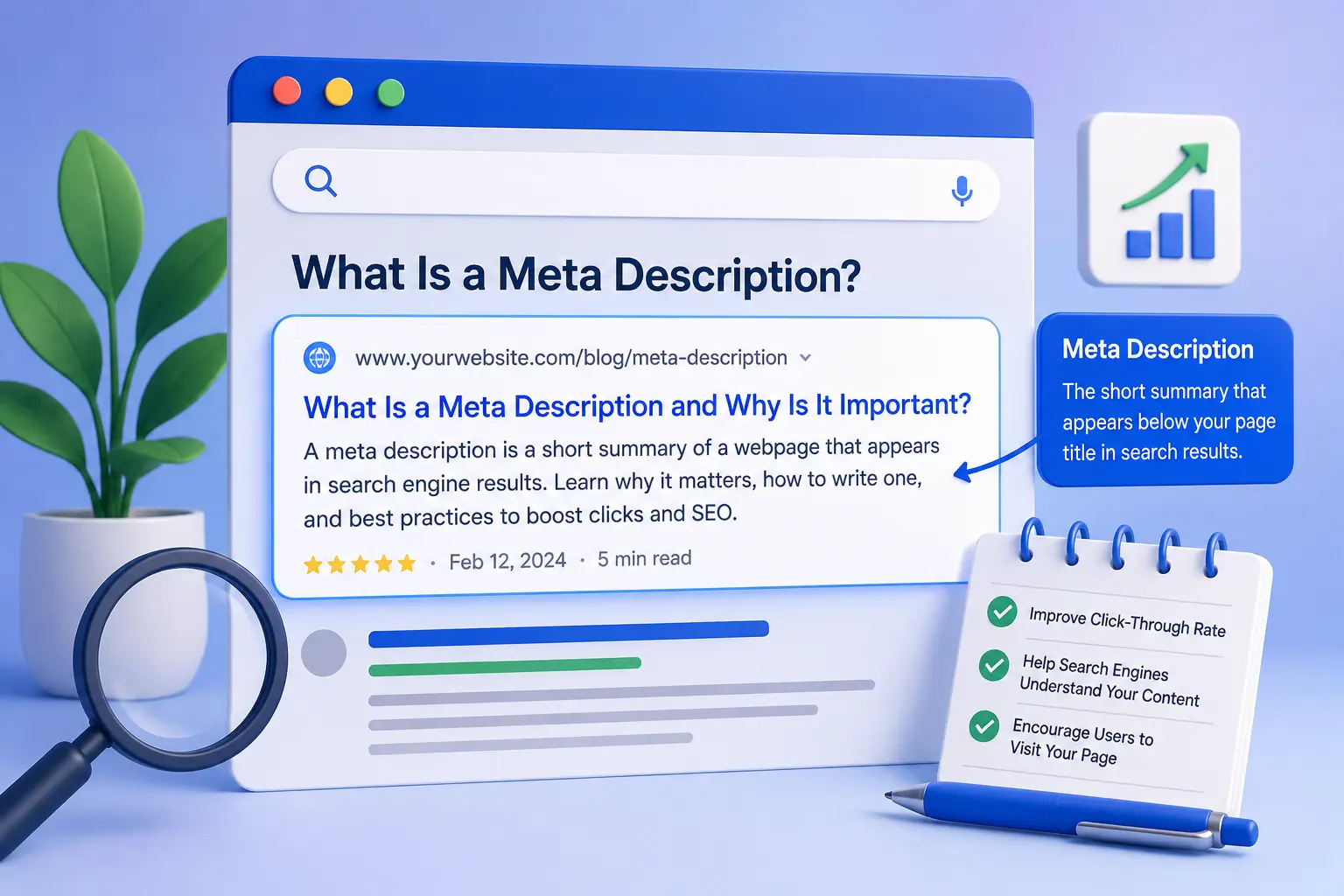
A meta description can summarize the page and encourage users to click from search results. Keywords appearing in the user's search may be highlighted in search results, but meta descriptions are not a direct ranking factor. The description should therefore be written for users rather than stuffed with keywords.
Keywords and Image SEO
Images can also have contextual information. Useful practices include:
Descriptive filenames
Appropriate alt text
Relevant surrounding content
Proper image formats
Alt text should describe the image for accessibility and should not be used as a place to insert unnecessary keywords.
Keywords and Internal Linking
Internal links connect pages within your website. Keyword-relevant anchor text can help users understand where a link leads.
For example:
Learn more about our law firm SEO services.
The anchor text describes the destination naturally. Avoid forcing exact-match keywords into every internal link.
What Is Keyword Mapping?
Keyword mapping is the process of assigning target keywords and topics to specific pages on a website.
For example:
Page | Primary Topic |
Homepage | Law Firm SEO |
Service Page | Law Firm SEO Services |
Local SEO Page | Local SEO for Law Firms |
Blog | What Is Local SEO? |
Blog | What Are Backlinks? |
Blog | What Is a Keyword? |
Keyword mapping helps prevent multiple pages from competing for exactly the same search intent.
What Is Keyword Cannibalization?
Keyword cannibalization occurs when multiple pages on the same website target the same or very similar search intent in a way that creates unnecessary competition between those pages. For example, imagine a website has five pages all targeting:
law firm SEO services
with nearly identical content.
Instead of strengthening one authoritative page, the website may create confusion about which page should rank. A better approach is to give each page a clear purpose.
Keywords and Topic Clusters
Modern SEO goes beyond individual keywords. A topic cluster organizes related content around a central subject.
For example:
Main Topic: Law Firm SEO
Supporting topics:
What Is Law Firm SEO?
What Is Local SEO?
What Are Backlinks?
What Is Keyword Research?
What Is Technical SEO?
What Is On-Page SEO?
What Is a Meta Description?
These related pages can be connected through internal links. This helps create a logical information structure.
Keywords and Semantic Relevance
Search engines can understand relationships between words and concepts. For example, a page about law firm SEO may naturally discuss:
Lawyers
Attorneys
Search engines
Organic traffic
Local search
Google Business Profile
Practice areas
Website optimization
Content
Backlinks
You do not need to repeat the same keyword constantly. Instead, cover the topic comprehensively using natural language and related concepts.
Keywords and Entity-Based Search
Search engines increasingly understand entities and relationships between concepts. For example, a search involving a law firm may involve entities such as:
Law firm
Lawyer
Practice area
City
Organization
Website
Creating clear, accurate content helps search engines understand what your website represents and how its topics relate to each other.
How to Choose the Right Keywords
Choosing keywords should begin with your audience.
Ask:
Who are you trying to reach?
For a law firm SEO agency, the audience may include:
Law firm owners
Lawyers
Marketing managers
Attorneys
Legal business decision-makers
What problems do they have?
Examples:
Low Google rankings
Poor local visibility
Low organic traffic
Weak website performance
Poor conversion rates
What are they searching for?
Potential topics may include:
Law firm SEO
Local SEO for lawyers
Technical SEO
SEO content
Backlinks
Keyword research
What action do you want them to take?
Possible actions include:
Read another article
Request an SEO audit
Contact the agency
Book a consultation
This connects keyword strategy with business objectives.
Keyword Research for Law Firms
Law firm SEO requires careful keyword research because legal searches can have different levels of intent.
For example:
Informational: what does a personal injury lawyer do
Local: personal injury lawyer in Miami
Commercial: best personal injury law firm Miami
Transactional: hire personal injury lawyer Miami
Each search represents a different stage of the user's journey. The appropriate page type may therefore be different for each query.
Practice Area Keywords
Law firms often organize their websites around practice areas. Examples include:
Family law
Criminal defense
Personal injury
Immigration law
Employment law
Business law
Estate planning
Each practice area may require its own keyword and content strategy. The content should accurately reflect the services the firm actually provides.
Location Keywords for Law Firms
Local law firms may target searches containing:
City
State
County
Neighborhood
"Near me"
For example:
family lawyer in Austin
or:
employment law firm near me
Location targeting should be supported by genuine local relevance rather than creating large numbers of thin pages for every possible location.
Keyword Research Tools
Several tools can help with keyword research.
Google Search: Google itself provides valuable clues through:
Autocomplete
Related searches
Search result pages
People Also Ask
Featured result formats
Google Search Console: Search Console can reveal queries for which your website already receives impressions and clicks. This can uncover opportunities to improve existing pages.
Google Trends:
Google Trends can help analyze search interest and compare topics over time.
Ahrefs: Ahrefs provides keyword research, competitor analysis, and search visibility data.
Semrush: Semrush provides keyword research, competitive analysis, and related SEO data.
Third-party tools provide estimates, so their numbers should be used as directional data rather than exact measurements of Google's internal data.
What Is a Keyword Strategy?
A keyword strategy is a plan for deciding:
Which topics to target
Which keywords are relevant
Which pages should target them
What search intent each page addresses
How pages should be internally linked
Which topics should be prioritized
How content supports business goals
A good strategy connects keywords to actual users and business outcomes.
Common Keyword Research Mistakes
Choosing Only High-Volume Keywords
High search volume does not always translate into qualified traffic or conversions. In many cases, lower-volume keywords with clear intent are more likely to attract users who are ready to contact a law firm or take another valuable action.
Ignoring Search Intent
A keyword may have strong search volume but represent an informational, navigational, or transactional intent that does not match your content. Understanding search intent helps ensure your pages satisfy what users are actually looking for.
Targeting Extremely Broad Keywords
Broad keywords are often highly competitive and may attract visitors with a wide range of intentions. Focusing on more specific, relevant keywords can improve your chances of ranking and attracting qualified traffic.
Creating One Page for Every Keyword Variation
Not every keyword variation requires a separate page. In many cases, a single comprehensive page can naturally target multiple related keywords while avoiding unnecessary duplication and keyword cannibalization.
Keyword Stuffing
Repeating the same keyword excessively makes content difficult to read and provides little value to users. Instead, write naturally and use related terms that help search engines understand the topic without sacrificing readability.
Ignoring Existing Rankings
Google Search Console can reveal keywords your website already ranks for, even if they are not your primary targets. Optimizing pages that already have visibility is often easier than starting with entirely new keywords.
Ignoring the Competition
The current search results provide valuable insights into what Google considers relevant for a particular keyword. Analyzing competing pages helps you understand user intent, content depth, and opportunities to create a more helpful resource.
How Keywords Fit Into Modern SEO
Keywords remain important, but modern SEO is not simply a keyword-matching exercise. A complete SEO strategy also considers:
Search intent
Content quality
Topic coverage
Website architecture
Internal linking
Technical SEO
Backlinks
User experience
Local relevance
Authority
Trust
Keywords vs. Topics
Although the terms are often used interchangeably, keywords and topics are not the same. A keyword is a specific search query, while a topic represents a broader subject that can include many related keywords.
Keyword | Topic |
A specific word or phrase that users type into Google. | A broader subject that covers multiple related keywords and search queries. |
Usually targets one search intent. | Can satisfy multiple search intents within a single piece of content. |
Example: what is local SEO | Example: Local SEO |
One keyword represents a single search query. | One topic can include hundreds or even thousands of related keyword variations. |
Keywords vs. Search Intent
Keywords and search intent are closely related, but they serve different purposes. A keyword tells you what someone searched for, while search intent helps explain why they performed that search and what type of information they expect to find.
Keywords | Search Intent |
The specific words or phrases users type into a search engine. | The underlying reason or goal behind a user's search. |
Identifies what is being searched. | Explains why the search was made. |
Example: law firm SEO pricing | Indicates commercial investigation, where the user is comparing services or costs before making a decision. |
Example: what is SEO for law firms | Indicates informational intent, where the user wants to learn about a topic. |
Helps identify relevant search terms to target. | Helps determine the type of content that best satisfies the user's needs. |
How Many Keywords Should a Page Target?
There is no fixed number. A single high-quality page may rank for:
One primary keyword
Several secondary keywords
Dozens of related queries
Hundreds of long-tail variations
The page should focus on one clear search intent or closely related group of intents. Do not create awkward content simply to increase the number of keywords.
Can One Page Rank for Multiple Keywords?
Yes.
A well-written page can rank for many related queries.
For example, a comprehensive article about backlinks could rank for searches related to:
What are backlinks?
What is a backlink?
Why are backlinks important?
How do backlinks work?
Types of backlinks
Quality backlinks
Should You Use Exact-Match Keywords?
Exact-match keywords can be useful when they fit naturally. However, exact matching is not the only goal. Natural language, topic coverage, search intent, and usefulness are more important than forcing the exact phrase repeatedly.
How to Build a Keyword-Focused Content Plan
A successful keyword strategy goes beyond finding search terms. It requires understanding your audience, organizing content around topics, and continuously improving your pages based on real search data and user behavior.
Step 1: Understand Your Audience
Identify the people you want to attract and understand their goals, challenges, and questions. Knowing your target audience helps you choose keywords and create content that addresses their specific needs.
Step 2: Identify Core Topics
List the primary subjects that are most relevant to your business, services, or industry. These core topics become the foundation for your website's content strategy and future keyword research.
Step 3: Research Search Queries
Use keyword research tools to discover the words, phrases, and questions your audience searches for. Look beyond search volume to identify terms that are relevant and likely to attract qualified visitors.
Step 4: Analyze Search Intent
Determine why users are searching for each keyword and what type of content they expect to find. Matching search intent helps create pages that better satisfy users and improve search performance.
Step 5: Analyze Search Results
Review the pages currently ranking for your target keywords to understand Google's expectations. Examine the content format, depth, search intent, and common topics covered by competing pages.
Step 6: Map Keywords to Pages
Assign each primary topic and related keywords to the most appropriate page on your website. This helps prevent keyword cannibalization and ensures every page has a clear SEO purpose.
Step 7: Create Useful Content
Develop high-quality content that answers users' questions clearly and completely. Focus on providing genuine value while naturally incorporating relevant keywords throughout the page.
Step 8: Build Internal Links
Connect related pages using descriptive and relevant internal links. A strong internal linking structure improves navigation, distributes authority, and helps search engines discover important content.
Step 9: Monitor Performance
Track your content's performance using Google Search Console and analytics tools. Review impressions, clicks, rankings, and user engagement to identify opportunities for improvement.
Step 10: Improve Existing Content
Regularly update your content as search behavior, industry trends, and competitor pages evolve. Refreshing existing pages helps maintain accuracy, improve relevance, and support long-term SEO performance.
Frequently Asked Questions
Why are keywords important?
Keywords help businesses understand what their target audience is searching for online. By identifying relevant search queries, you can create content that matches user needs, improves search visibility, and attracts visitors who are more likely to become potential clients.
What are the four main types of search intent?
The four primary types of search intent are informational, navigational, commercial investigation, and transactional. Understanding these categories helps you create content that aligns with users' goals and increases the likelihood of satisfying their search expectations.
What is keyword stuffing?
Keyword stuffing is the excessive and unnatural repetition of keywords in an attempt to manipulate search engine rankings. Modern search engines prioritize high-quality, readable content, so writing naturally for users is far more effective than overusing keywords.
How many keywords should I use on a page?
There is no recommended number of keywords for a page. Instead, focus on covering one primary topic, satisfying the intended search intent, and naturally incorporating relevant keywords and related terms where they improve clarity and context.
What is keyword mapping?
Keyword mapping is the process of assigning target keywords and topics to specific pages on your website. A well-planned keyword map helps organize content, avoid duplication, and ensure each page has a clear SEO purpose.
What is keyword cannibalization?
Keyword cannibalization occurs when multiple pages target the same or very similar keywords and search intent. This can make it difficult for search engines to determine which page should rank, potentially reducing the visibility of all competing pages.
Are keywords still important for SEO?
Yes. Keywords remain an essential part of SEO because they help search engines understand your content and connect it with relevant searches. However, successful SEO also depends on search intent, content quality, topical relevance, authority, and user experience.
What keywords should a law firm target?
Law firms should target keywords that accurately reflect their practice areas, legal services, geographic locations, and the questions potential clients commonly ask. Combining service, location, and informational keywords helps attract qualified traffic throughout the client journey.
Should every law firm create location pages?
Not necessarily. Location pages should only be created when they provide unique, valuable information for users in a specific area. Publishing large numbers of nearly identical location pages can create duplicate content issues and reduce the overall quality of your website.
Key Takeaways
Keywords are the words and phrases people use when searching for information, services, products, and answers online. They provide an important foundation for SEO because they help businesses understand what their audience wants. However, successful SEO is not about repeating keywords.
A strong keyword strategy focuses on:
Search intent
Relevance
Topic coverage
Content quality
Search demand
Competition
Business value
Website structure
Internal linking
User needs
For law firms, keyword research should connect the firm's actual services and locations with the questions and searches of potential clients. The strongest strategy is to create useful pages that satisfy specific search intents rather than creating dozens of pages designed only to target slightly different keyword variations.
Build a Smarter Keyword Strategy for Your Law Firm
Choosing the right keywords is only the beginning. Those keywords need to be mapped to the right pages, organized into logical topics, supported by internal links, and integrated into a broader SEO strategy.
At LawFirmSEO.services, keyword research can be combined with technical SEO, content strategy, local SEO, on-page optimization, website architecture, and link building to create a search-focused strategy for law firms.
Ready to put this to work for your firm?
We'll audit your site for free and show you exactly which pages are costing you cases.
Get a free SEO audit